The Day I Walked Onto a Film Set and Never Left
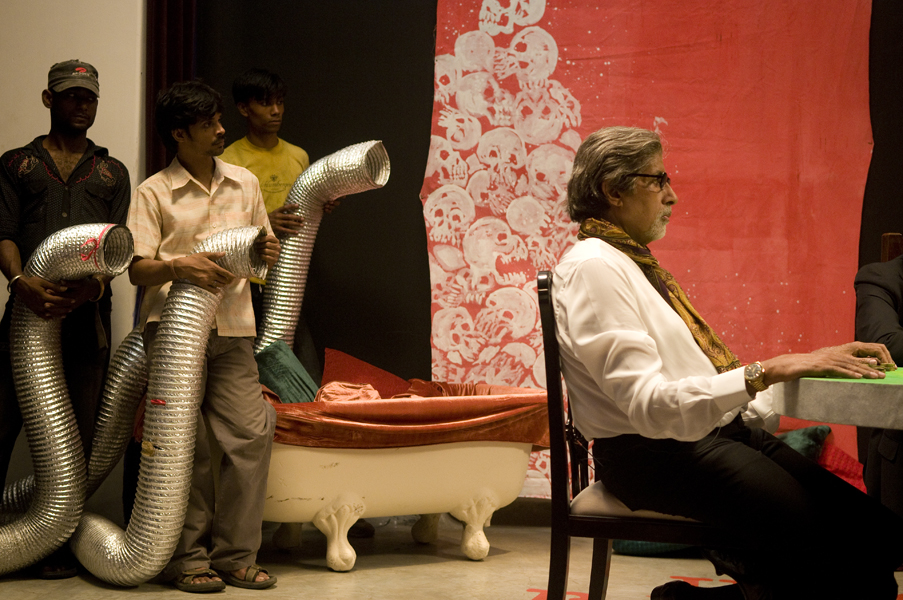
People often assume that a unit still photographer’s job is simple: stand on set, take photographs of actors, and go home. The reality is far more complex. A good still photographer is part observer, part storyteller, and part invisible crew member. The best photographs often come from understanding not just where to point the camera, but understanding the rhythm of a film set, the emotions of a scene, and the people creating it.
My journey into this profession began by accident.
Shortly after graduation, a friend’s uncle invited me to visit a film set. The idea was simple: come and see how movies are made, how lighting works, and how hundreds of people come together to create a single scene. I had no expectations. I was simply curious.
What I witnessed on that first day completely changed my understanding of filmmaking.
I was amazed by the scale of the operation. The amount of planning, manpower, equipment, and coordination required to create a single shot was something I had never imagined. Dozens of technicians worked behind the camera. Lights were adjusted for hours. Art directors fine-tuned details that would barely appear on screen. Everyone was focused on a common goal: creating a few seconds of cinema.
That day, I was introduced to the film’s still photographer and soon began assisting him.
This was during the film era, before digital photography completely transformed the industry. Productions would provide the still photographer with a limited number of film rolls. Imagine having only 24 or 36 exposures for an entire day of shooting. Every frame had value. Every click had a cost.
The still photographer I assisted was extremely selective. At first, I thought he simply wasn’t shooting enough. Later, I realised he was being disciplined. Most of his photographs focused on the lead actors and continuity images for the art, costume, and makeup departments. At the end of the day, the exposed rolls would be sent to a laboratory for processing and printing.
There was no instant review. No LCD screen. No second chances.
Then one day, another photographer arrived on set carrying a digital camera.
Unlike the still photographer I was assisting, he wasn’t focused solely on actors. He was documenting everything: technicians setting lights, assistants preparing props, actors waiting between takes, moments of silence, moments of chaos. He seemed interested in the life of the film set itself.
His name was Fawzan Husain.
At the time, he was working on a coffee table book about movie sets. I found his approach fascinating. I would tell him what scenes were coming up next, when the set would be busiest, and the best times to photograph certain departments at work. Slowly, we became friends.
More importantly, he changed the way I looked at photography.
Watching him work made me realise that photographing actors and continuity references was only one part of the story. Documenting the filmmaking process itself required observation, patience, and a documentary photographer’s eye. It was not enough to record what happened; you had to interpret it.
I showed him some of my photographs, and he encouraged me to study documentary photography more seriously. He advised me to observe people, anticipate moments, and learn how to tell stories through images rather than simply collecting them.
Without realising it at the time, I had found my mentor.
A few years later, I received my first major feature film assignment: Teen Patti, starring Amitabh Bachchan.
The brief was straightforward. Create photographs for promotional material and a coffee table book documenting the production.
For a young photographer, it was both exciting and terrifying.
Imagine beginning your career on a film starring one of the biggest icons in Indian cinema. Every day I walked onto set carrying equal amounts of enthusiasm and nervousness. I wanted every frame to be perfect.
Then something unexpected happened.
After seeing some of the photographs, Amitabh Bachchan appreciated the work and asked for certain images to be shared for his personal blog. For a young photographer still finding his place in the industry, that encouragement meant everything.
More importantly, it taught me one of the most important lessons of my career.
A unit still photographer’s job is not simply about taking pictures.
It is about building trust.
On a film set, there is often a silent conversation taking place between the photographer and the actors. You learn to read their moods. You learn when to step forward and when to disappear. You learn which moments deserve a photograph and which moments should remain private.
The greatest compliment a still photographer can receive is becoming invisible.
When actors stop noticing your camera, when directors trust your presence, and when the crew accepts you as part of the filmmaking process, you gain access to genuine moments that cannot be staged.
Those moments are what make great film stills.
Looking back, my first project gave me more than a portfolio. It taught me that the real job of a unit still photographer is not documenting what a film looks like. It is documenting how a film comes to life.
 Next post
The Assignment That Never Ended
Next post
The Assignment That Never Ended